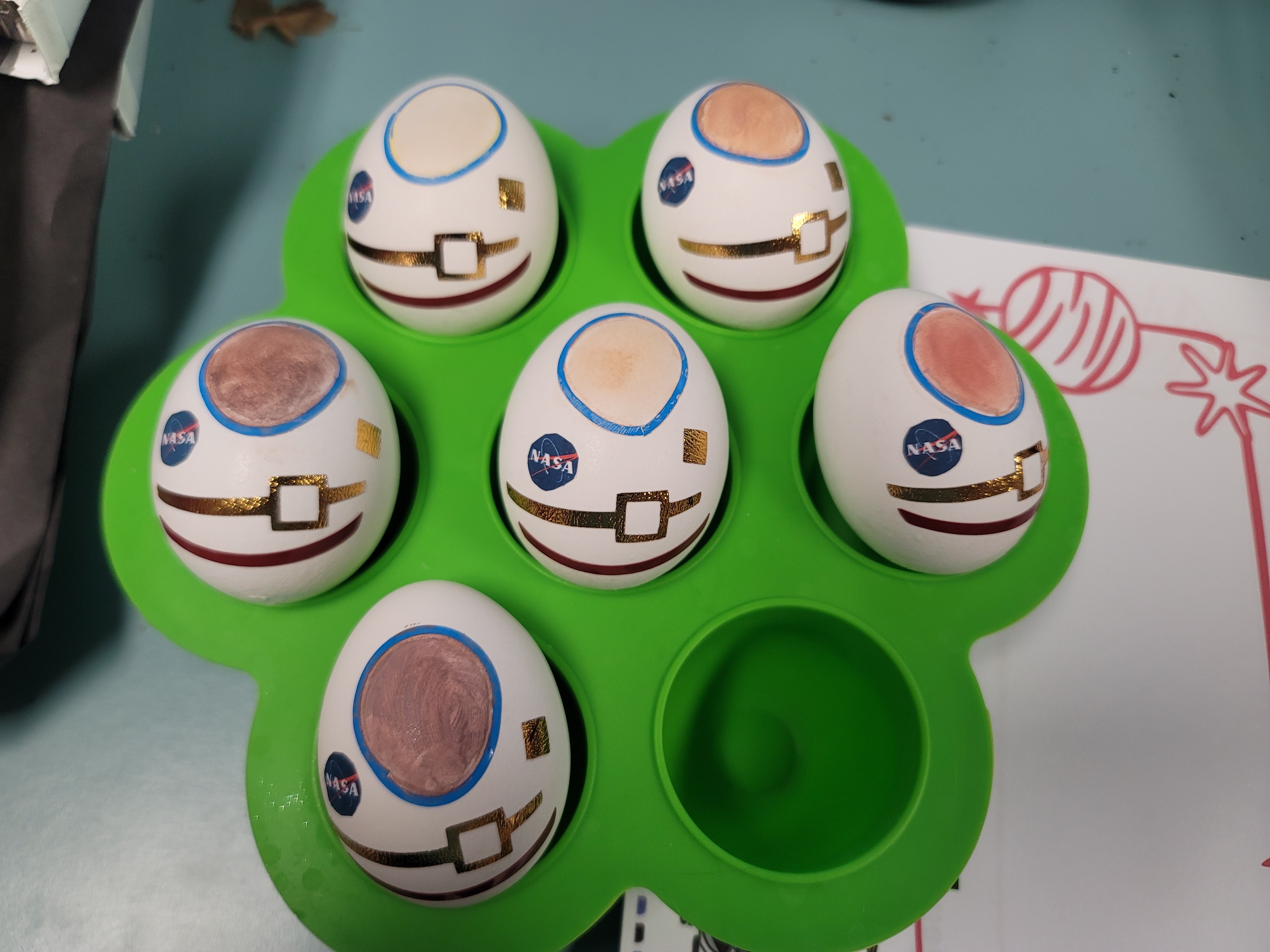
A hands-on STEM challenge where students become NASA engineers, designing and testing lunar landers to safely return their Egg-stranauts to Earth.
Plushie Dialogue
🐿️ ChipChip: “According to my calculations, this mission cannot fail.”
🦝 KoonKoon: “Did you actually do calculations?”
🐿️ ChipChip: “No.”
🦝 KoonKoon: “Then what are you basing that on?”
🐿️ ChipChip: “The power of friendship.”
🦝 KoonKoon: “We’re dropping an egg from a ladder.”
🐿️ ChipChip: “The power of friendship and bubble wrap.”
Unit Overview
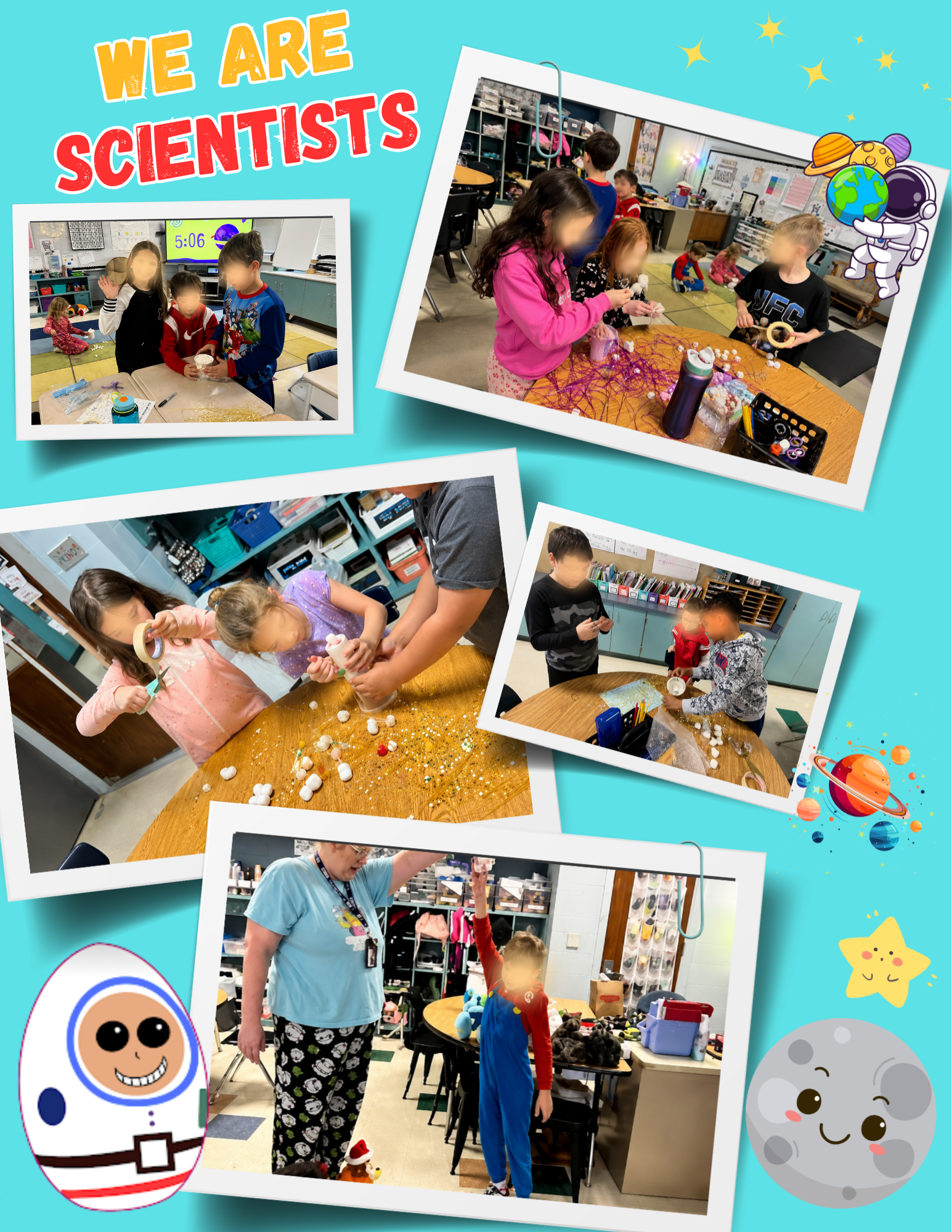
Students explore the work of Katherine Johnson while applying the Engineering Design Process to solve a real-world problem: how to safely land an astronaut on the moon. Working in teams, students design, build, test, and improve a lunar lander capable of protecting an Egg-stranaut during landing. Throughout the lesson, students make predictions, record observations, analyze results, and reflect on how engineers use creativity and perseverance to solve problems.
Materials Needed
- Eggs (hard-boiled recommended)
- Paper or plastic cups
- Cotton balls
- Bubble wrap
- Marshmallows
- Rubber bands
- Easter grass or similar packing materials
- Markers
- Lab sheets (download below)
- Test platform or safe drop area
- Lesson Presentation (download below)
- Optional stuffed animal judges
Important Teacher Tip
🥚 Hard-boil the eggs before the challenge.
While students love the excitement of testing their designs, hard-boiled eggs dramatically reduce cleanup and allow students to focus on engineering and problem solving rather than worrying about a messy accident.
Lesson Snapshot
Mission Briefing
Students learn about Katherine Johnson and her critical role in NASA’s space program. They discuss how engineers and mathematicians work together to solve problems and keep astronauts safe.
Design Phase
Students become NASA engineers and sketch a lunar lander design before selecting materials and constructing their prototype.
Build Phase
Teams construct their landers while considering which materials will best absorb impact and protect their Egg-stranaut.
Testing Phase
Students present their designs and conduct test drops to determine whether their Egg-stranaut survives the landing. They observe results and analyze what worked well and what could be improved.
Reflection
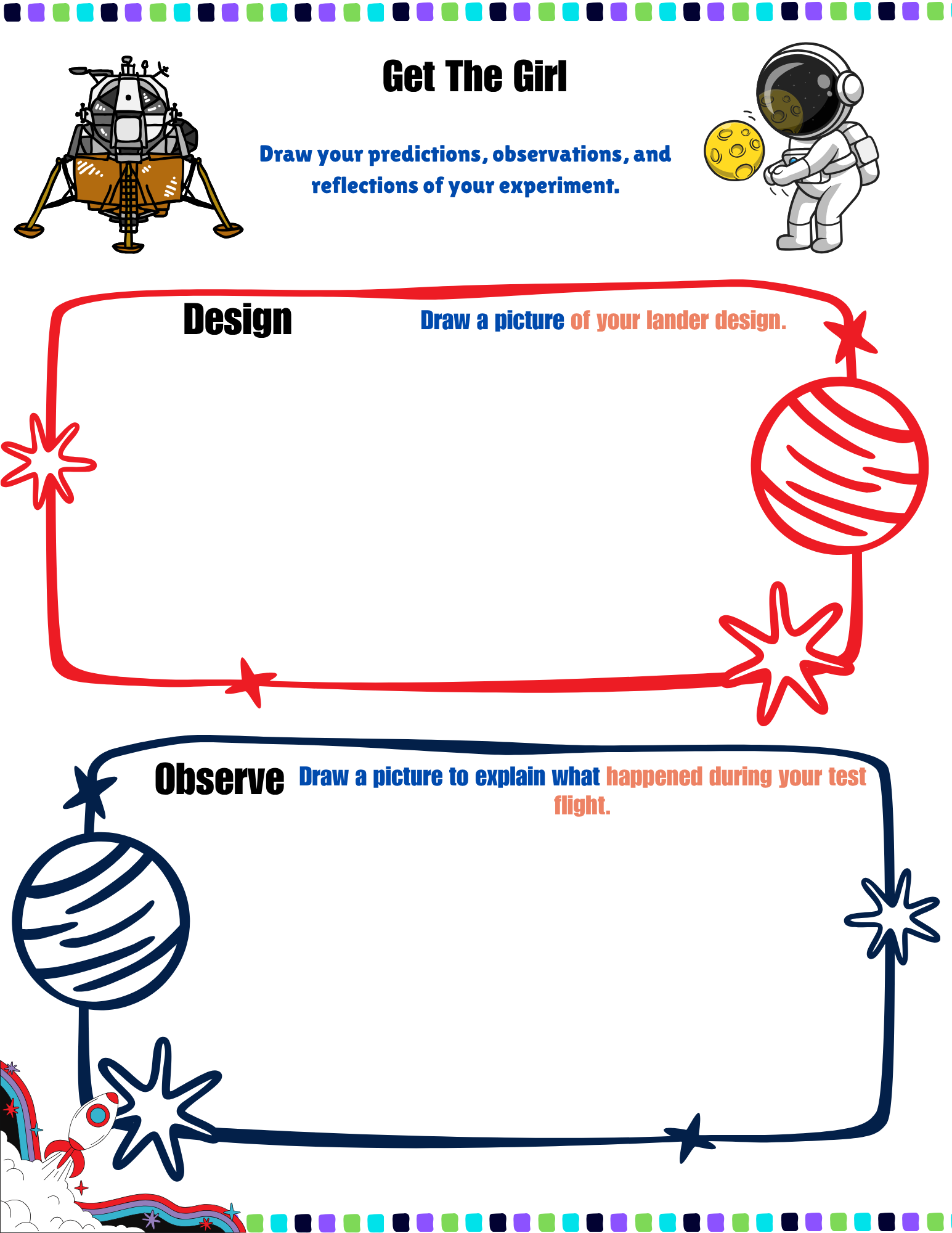
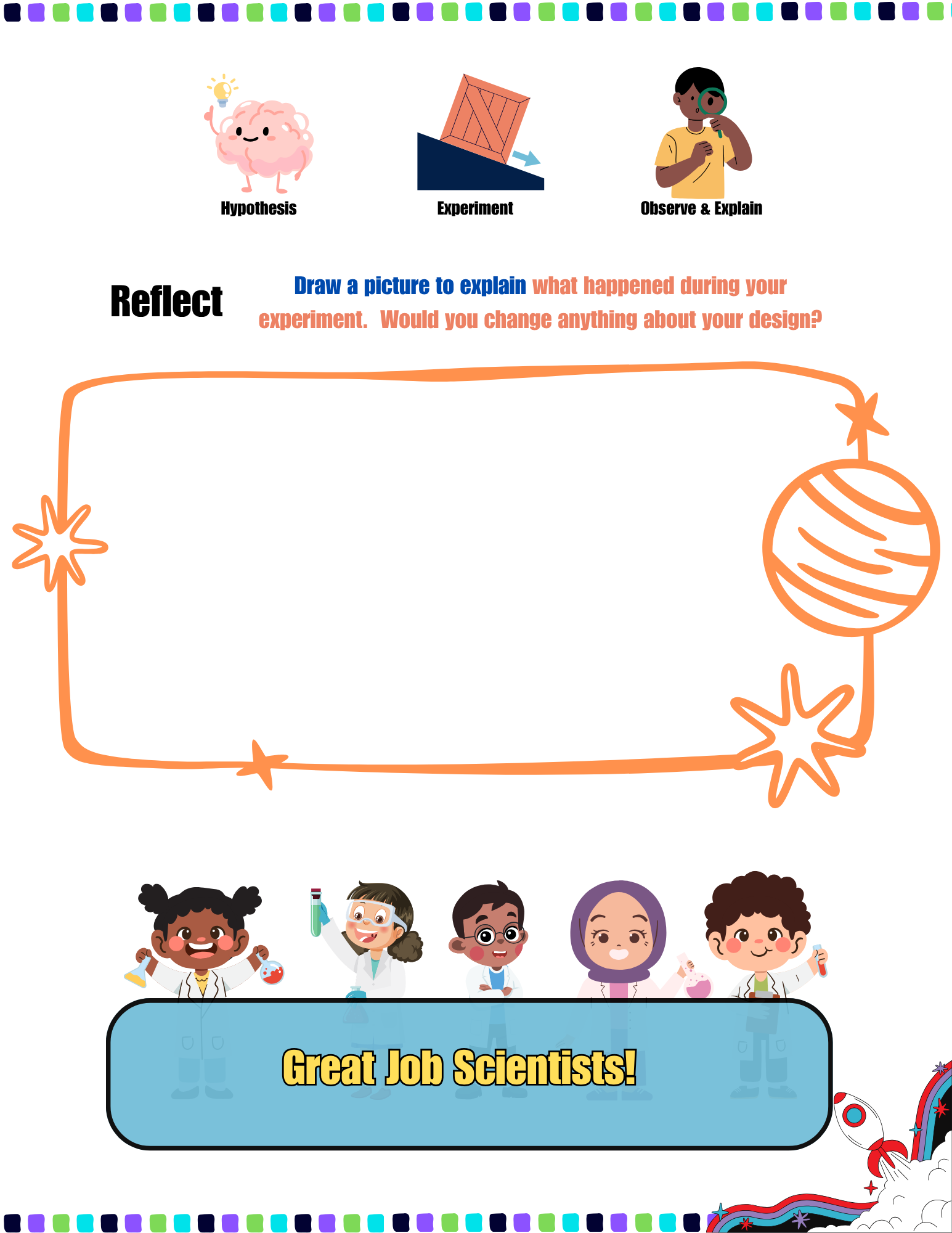
Students document observations, evaluate their design choices, and consider modifications that would improve future missions.
Adaptations & Alternatives
One of the strengths of this lesson is its flexibility.
- Stuffed animal judges can easily be replaced with classroom volunteers, teachers, administrators, or other student groups.
- Construction materials can be adapted based on availability.
- Different landing challenges can be created by changing drop heights or limiting available materials.
- Students may work independently, with partners, or in small engineering teams.
The goal is not a perfect lander, it’s giving students an opportunity to think like engineers.
Signature Classroom Moment
To increase engagement, students presented their designs to a panel of stuffed animal “NASA Engineering Experts” before conducting their test flights. This playful element encouraged students to explain their reasoning and defend their design choices while reducing the pressure often associated with public speaking.
Teachers can easily substitute plush judges with classmates, volunteers, or school staff while maintaining the same presentation component.
Downloads
Why This Lesson Works
Many students view science as a collection of facts. This lesson helps students see science and engineering as a process of experimentation, failure, revision, and improvement.
Rather than being told which materials work best, students must make predictions, test ideas, observe outcomes, and revise their thinking based on evidence. The challenge naturally develops problem-solving skills, collaboration, perseverance, and critical thinking while connecting students to the real-world work of engineers and scientists.
Final Reflection
One of my favorite aspects of this lesson is that every student becomes an engineer.
Students quickly discover that there isn’t one “correct” solution. Some designs succeed immediately, while others require adjustments and redesigns. Those moments of failure often become the most valuable learning opportunities because students must analyze what happened and determine how to improve their design.
By connecting engineering challenges to the inspiring story of Katherine Johnson, students see that science, mathematics, creativity, and perseverance all work together to solve real-world problems. More importantly, they begin to see themselves as problem solvers capable of tackling challenges of their own.
📸 Teacher Note: The Egg-stranauts in this lesson were decorated as astronauts using simple stickers, markers, and craft materials. Students loved personalizing their astronauts before launch, which increased investment in the engineering challenge and made the testing phase even more exciting.

