Can a giant Bluey stuffed animal teach science? Absolutely! In this hands-on friction investigation, students become scientists as they predict, observe, and explain how different surfaces affect motion. With themed versions for Harry Potter, sports, animals, and video game fans, this lesson uses student interests, scientific inquiry, and active experimentation to make learning about friction both meaningful and memorable.
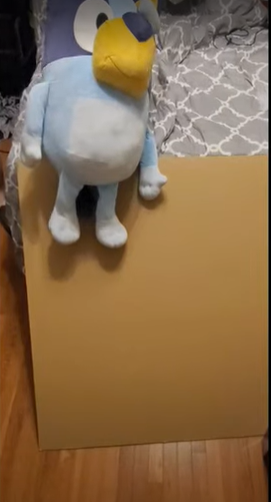
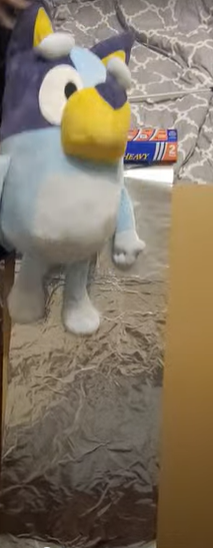
Bluey: “Has this experiment been peer reviewed?”
KoonKoon: “Yes.”
Bluey: “By who?”
KoonKoon: “ChipChip.”
Bluey: “That doesn’t make me feel better.”
Teacher Quick View
Grade: 2nd Grade
Subject: Science
Topic: Friction and Motion
Standards Alignment:
Students conduct experiments and make observations to determine how friction affects the motion of an object.
Time Required:
Approximately 45–60 minutes
Materials Needed:
- Large stuffed animal (I used Bluey)
- Ramps or slides (1 per group)
- Various surfaces (fabric, carpet, cardboard, sandpaper, plastic, etc.)
- Student observation sheets (download below)
- Lesson presentation with Bluey drop videos (download below)
- Pencils/crayons
- Toy cars, balls. or other objects to drop
- Optional themed materials
Downloads Included:
Modified versions of each theme for struggling readers and ELLs
Lesson Overview
This hands-on science lesson explores the concept of friction through prediction, observation, experimentation, and explanation.
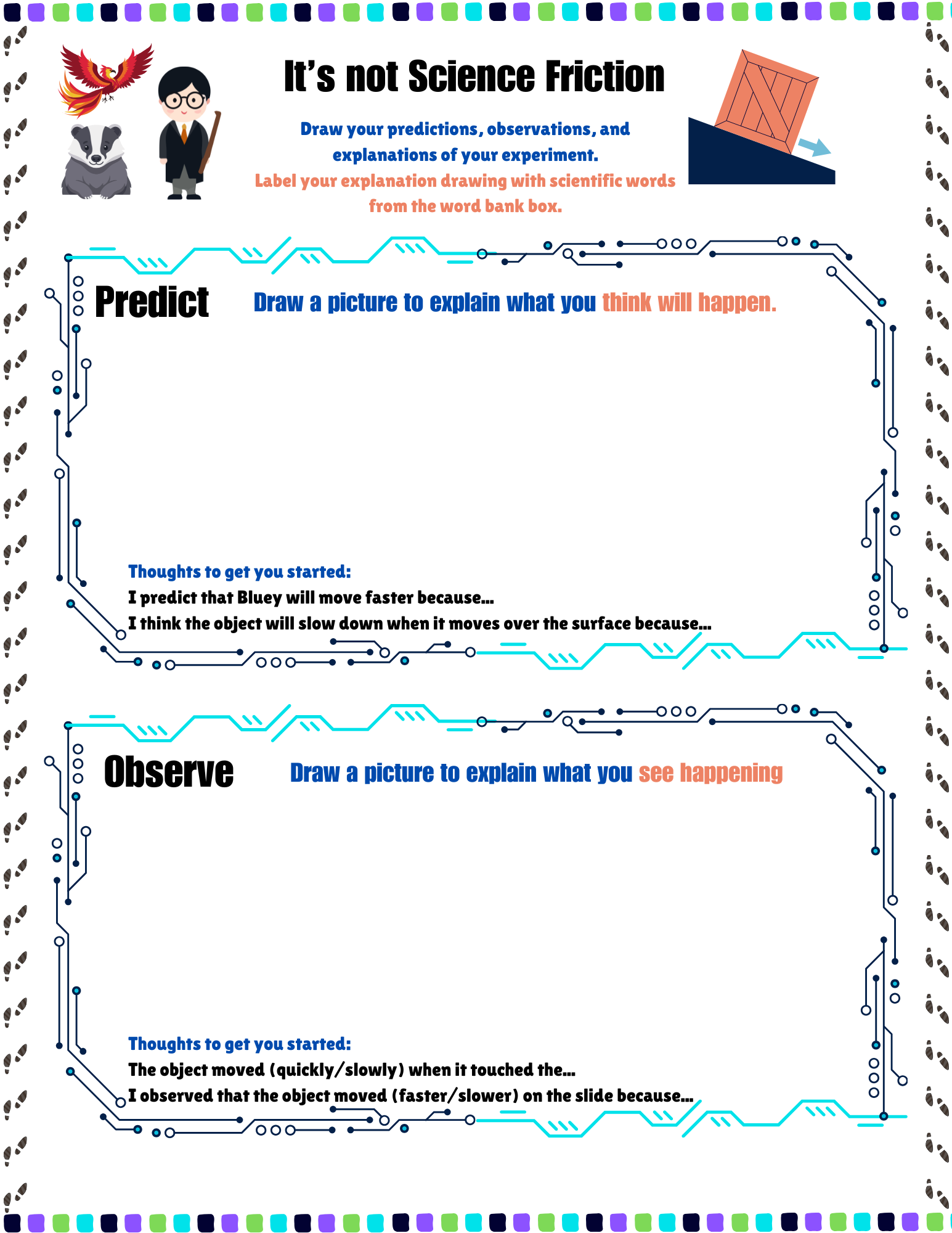
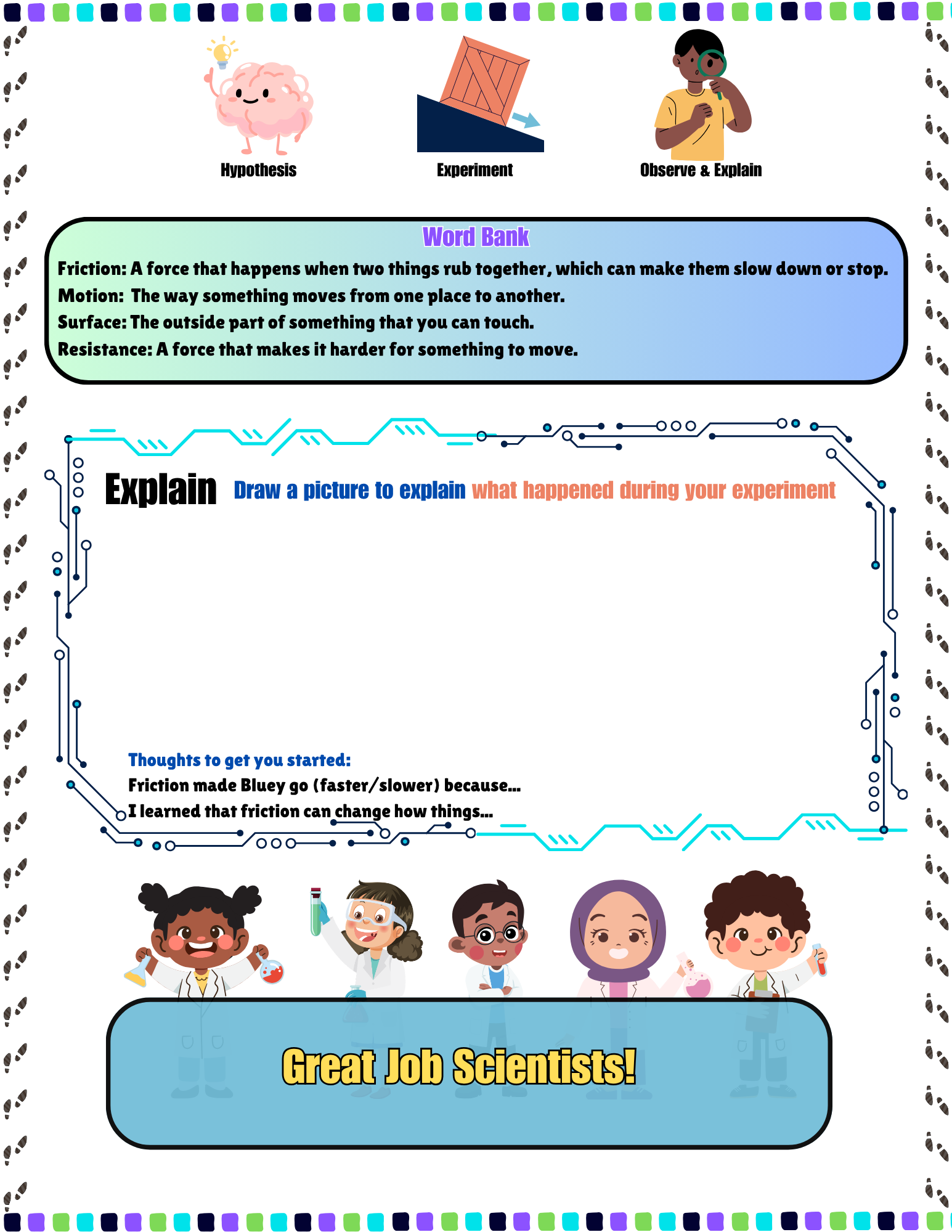
Students investigate how different surfaces affect movement by sending items down a ramp and observing the outcomes. Students then record their findings using a Predict-Observe-Explain (POE) graphic organizer. Students explore friction further by using various materials to either slow down or speed up their items, depending on which role they are assigned.
To increase engagement and ownership, students are grouped according to interests such as Harry Potter, sports, animals, or video games. Each group receives a themed version of the observation sheet while still working toward the same scientific learning goal.
Why I Created Multiple Versions
One thing I noticed repeatedly in the classroom is that engagement increases dramatically when students see themselves reflected in the learning materials.
Rather than giving every group identical worksheets, students worked with themed versions based on interests they were already passionate about. Some students were excited about Harry Potter, others connected more with sports, animals, or video games.
The science stayed exactly the same.
The learning target stayed exactly the same.
The theme simply provided another entry point into the lesson.
Differentiation for Struggling Readers
This lesson also includes modified versions of every observation sheet.
The modified versions include:
- Simpler language
- Sentence starters
- Additional visual supports
- Reduced reading demands
- Structured response prompts
These supports help students focus on scientific thinking without becoming overwhelmed by literacy demands.
The Experiment
Students begin by making predictions about what will happen when their items travel across different surfaces.
They then:
- Observe the setup
- Make predictions
- Conduct the experiment
- Record observations
- Explain what happened using scientific vocabulary
Students use terms such as:
- Friction
- Motion
- Surface
- Resistance
throughout the lesson and are encouraged to label their explanations using the provided word bank.
Pre-Assessment
Before beginning the lesson, students complete a short friction pre-assessment.
Questions explore prior knowledge such as:
- What happens when you rub your hands together?
- What is friction?
- Which surfaces create more or less resistance?
- Where do we see friction in everyday life?
This quick assessment helps identify misconceptions before students begin experimenting.
Extension Activities
Surface Challenge
Challenge students to find additional surfaces around the classroom and predict how friction might affect movement on each one.
Real World Friction Hunt
Students identify examples of friction they encounter in daily life such as:
- Bicycle brakes
- Playground slides
- Shoes gripping the floor
- Sports equipment
- Vehicle tires
Design a Better Slide
Students design their own playground slide and explain how friction would affect safety and speed.
Why This Lesson Works
This lesson combines several things that I value as an educator:
- Student choice
- Hands-on investigation
- Differentiation
- Scientific inquiry
- Interest-based engagement
Rather than simply telling students what friction is, students experience it.
They make predictions.
They test ideas.
They observe outcomes.
They explain their thinking.
That process helps students develop deeper understanding while also building critical thinking and scientific reasoning skills.
I also love that this lesson allows students to enter through their interests. Whether a student loves sports, animals, Harry Potter, or video games, everyone is participating in the same scientific investigation while feeling a personal connection to the activity.
Final Reflection
Teaching can be hard.
Creating resources like these is where I find my peace.
I love building lessons that combine creativity, student interests, and meaningful learning experiences, and I love sharing them with other educators who might be able to use them in their own classrooms.
If you use this lesson, adapt it, have questions, or have ideas for improving it, I would genuinely love to hear from you.
Feedback helps me continue refining these resources and creating new ones. Feel free to leave a comment, or send me an e-mail at:

