A hands-on café adventure where students learn to budget, prioritize, and make smart spending decisions.
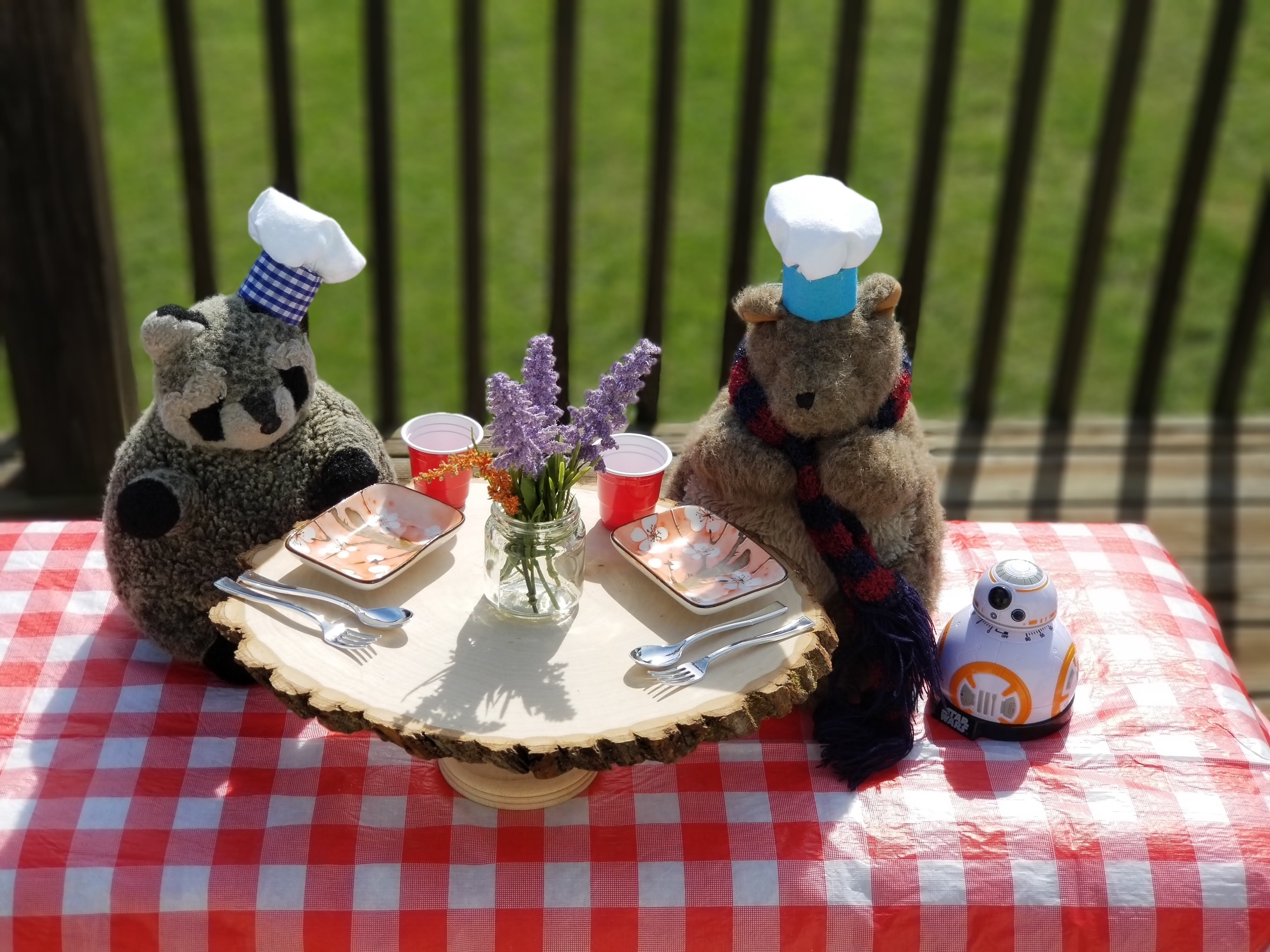
🦝KoonKoon: “Wait… I only get ten dollars? But I wanted steak, fries, cake, and a milkshake.”
🐿️ ChipChip: “In this economy?”
🦝 KoonKoon: “Man, this budgeting thing is harder than I thought.”
Teacher Quick View
Grade Level: 2nd Grade
Time Required: 30–45 Minutes
Standard: 2.10 Describe the purpose of a budget.
Skills Developed:
- Budgeting
- Prioritization
- Financial Literacy
- Decision-Making
- Needs vs. Wants
- Addition & Money Skills
Unit Overview
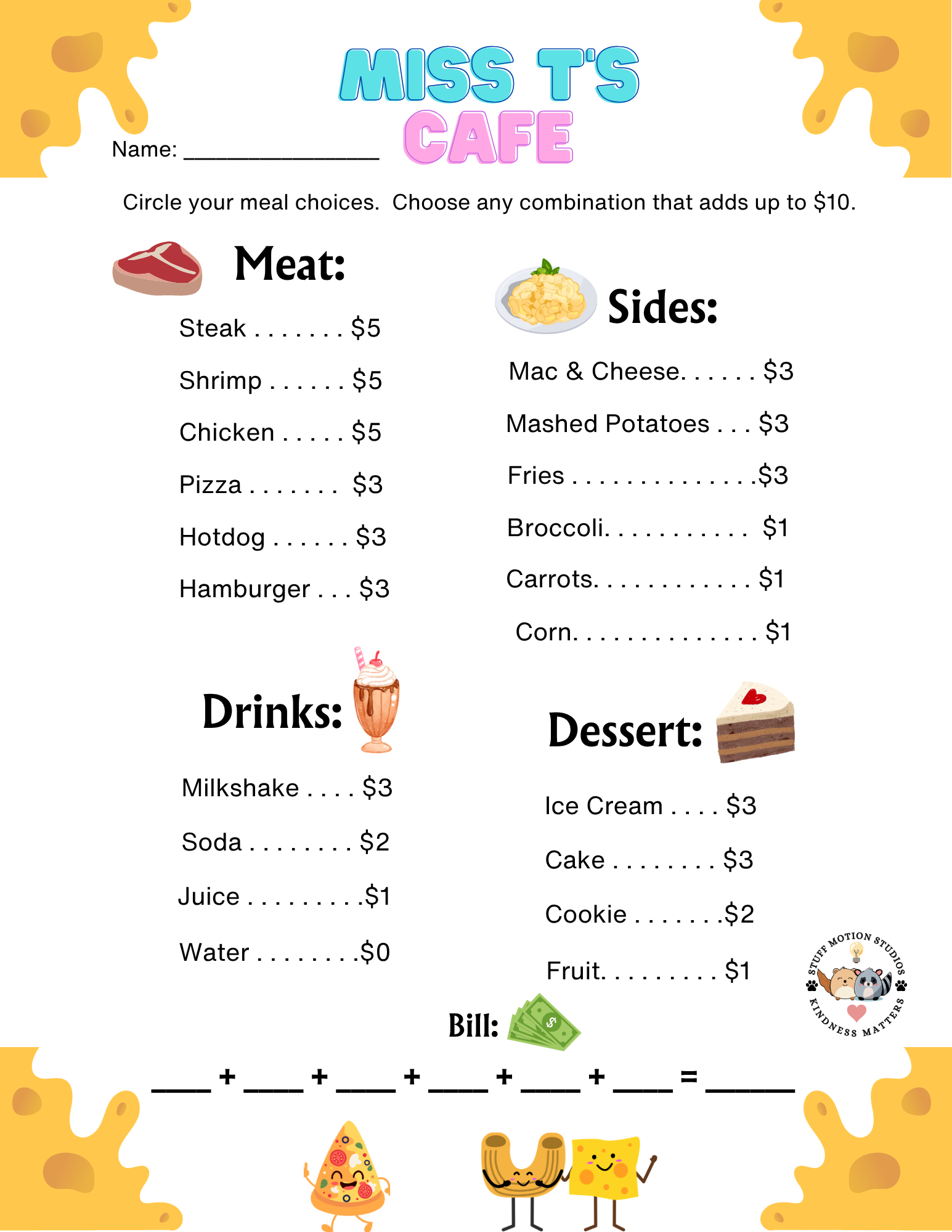
Students become customers at Miss T’s Café and are challenged to build a meal while staying within a $10 budget. Through discussion, guided instruction, and a hands-on menu activity, students learn the purpose of a budget, explore the difference between needs and wants, and practice prioritizing spending decisions.
Materials Needed
- Miss T’s Café worksheet (Download below)
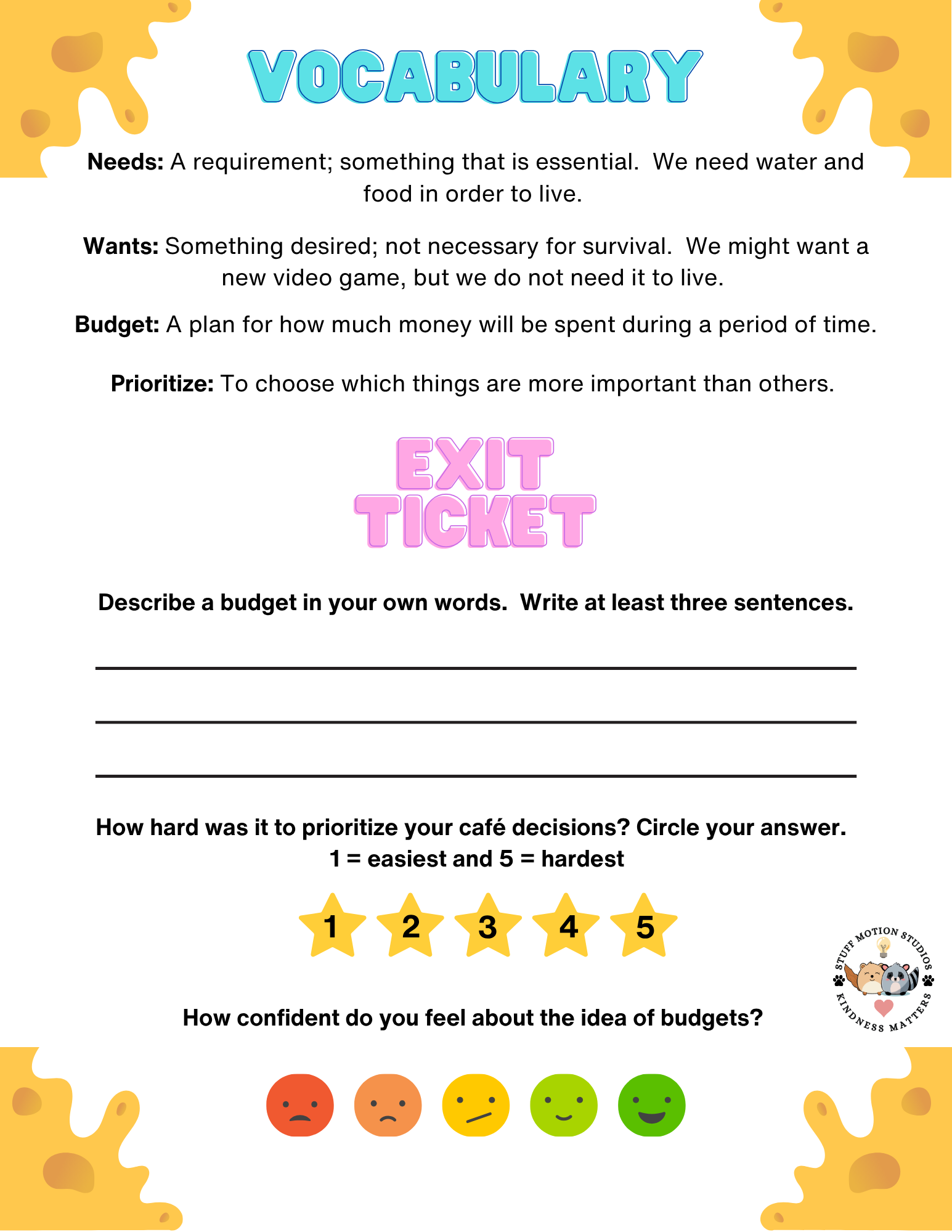
- Exit Ticket (Download below)
- Play money
- Billfolds (optional – Download below)
- Presentation slides (Download below)
- Pencils
Lesson Snapshot
Introduction / Hook
Students watch a short video and discuss situations where they wanted something that seemed too expensive. They consider how people make spending decisions and what options are available when they do not have enough money.
Learning Activity
Students learn the concepts of budgets, needs, wants, and prioritization. They are then given a $10 budget and challenged to create a meal from Miss T’s Café that meets their needs and wants, all while staying within budget.
Reflection / Assessment
Students complete an exit ticket explaining the purpose of a budget, reflecting on how difficult it was to make spending decisions, and rating their confidence in understanding budgets.
Downloads
Lesson Plan
Lesson Presentation
Cafe Worksheet & Exit Ticket
Billfold File – Cricut and Printable PDF
Technology Integration
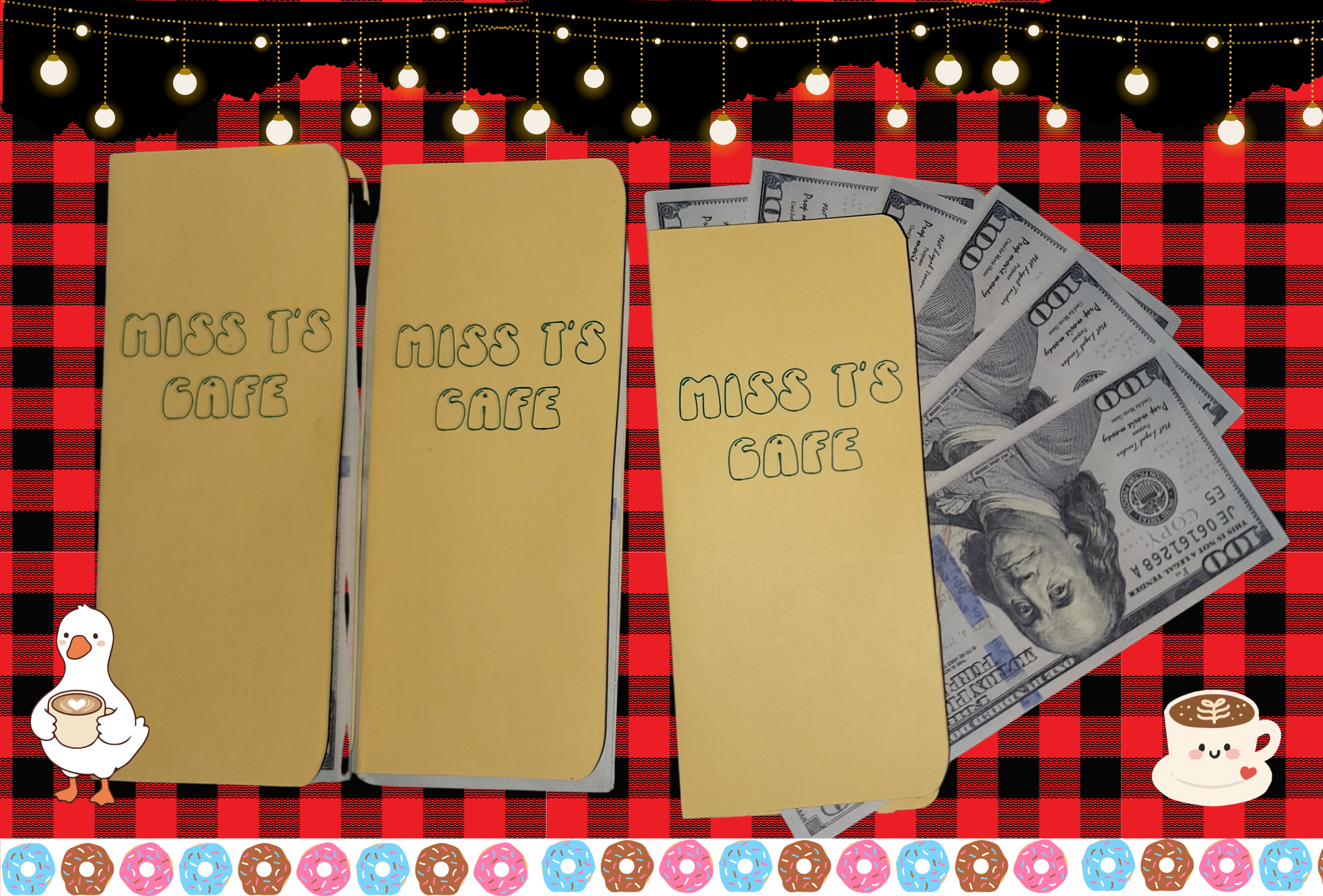
This lesson was created using Canva for the presentation and student materials. Custom billfolds were designed in Cricut Design Space and cut using a Cricut Maker to provide students with a hands-on budgeting experience.
Why This Lesson Works
Financial literacy can feel abstract for young learners. By transforming budgeting into a restaurant experience, students are given an authentic context to make spending decisions. The $10 budget forces students to evaluate choices, prioritize needs, and think critically about how money is spent. The addition of play money and student billfolds turns the lesson into an engaging simulation rather than a worksheet exercise.
Final Thoughts
As a former Accountant before transitioning into education, I understand the importance of budgeting and financial decision-making in everyday life. While second graders are not balancing household budgets or managing bank accounts, they are beginning to develop the critical thinking skills needed to make responsible financial choices. My goal with this lesson was to introduce those concepts in a way that is meaningful, memorable, and fun for young learners.
One of my favorite memories of this lesson is that it was originally created as a college assignment and taught to my classmates in my teacher preparation program. Despite being adults, they were completely invested in the activity. Conversations about menu choices, spending decisions, and budgeting strategies quickly filled the room as everyone worked to stay within their budget. Their enthusiasm reinforced my belief that hands-on learning experiences have the power to engage learners of any age.

